So which is it? Well, if you're talking about the city, it's Scottsbluff. And if you're talking about the rock formations, it's Scotts Bluff. Scotts Bluff was an important landmark on the Oregon Trail, visible from miles away, and when travelers saw it, they knew they were 1/3 of the way along the trail.
We camped for a week at a very nice city-run full-service campground, with a beautiful view of Scott's Bluff.
This was an exciting stop for us, as there was a large box waiting for us at the post office, filled with school books for Damien. We decided to spend a few days getting up to date in his studies before sight-seeing. We had managed to do quite a bit with the online resources that were available to us through the Calvert School, but there were some gaps we had to address.
Mistake. We planned our visit to the Monument for Oct 1, and were greeted with this sign.
The campground had television, and we'd been watching the news. It had just not occurred to us that this was what they were talking about.
So, we viewed it from afar, and Damien wasn't able to get his NPS passport stamped.
After a week in Scottsbluff, we headed for Sidney, Nebraska. I snapped this picture of Chimney Rock on the way, knowing that, due to the "shutdown," there was no use stopping.
After spending the night at the Cabela's RV park at the company's store and headquarters complex, we literally fled east in the morning, the oncoming storm on our heels and giving us a nice tail wind. We had completely changed our plans, canceling our visit to relatives in the Denver area. Between road and bridge closures (floods), park closures (the shutdown), and the unfavorable weather forecasts, we decided it would be smart to head east and south instead.
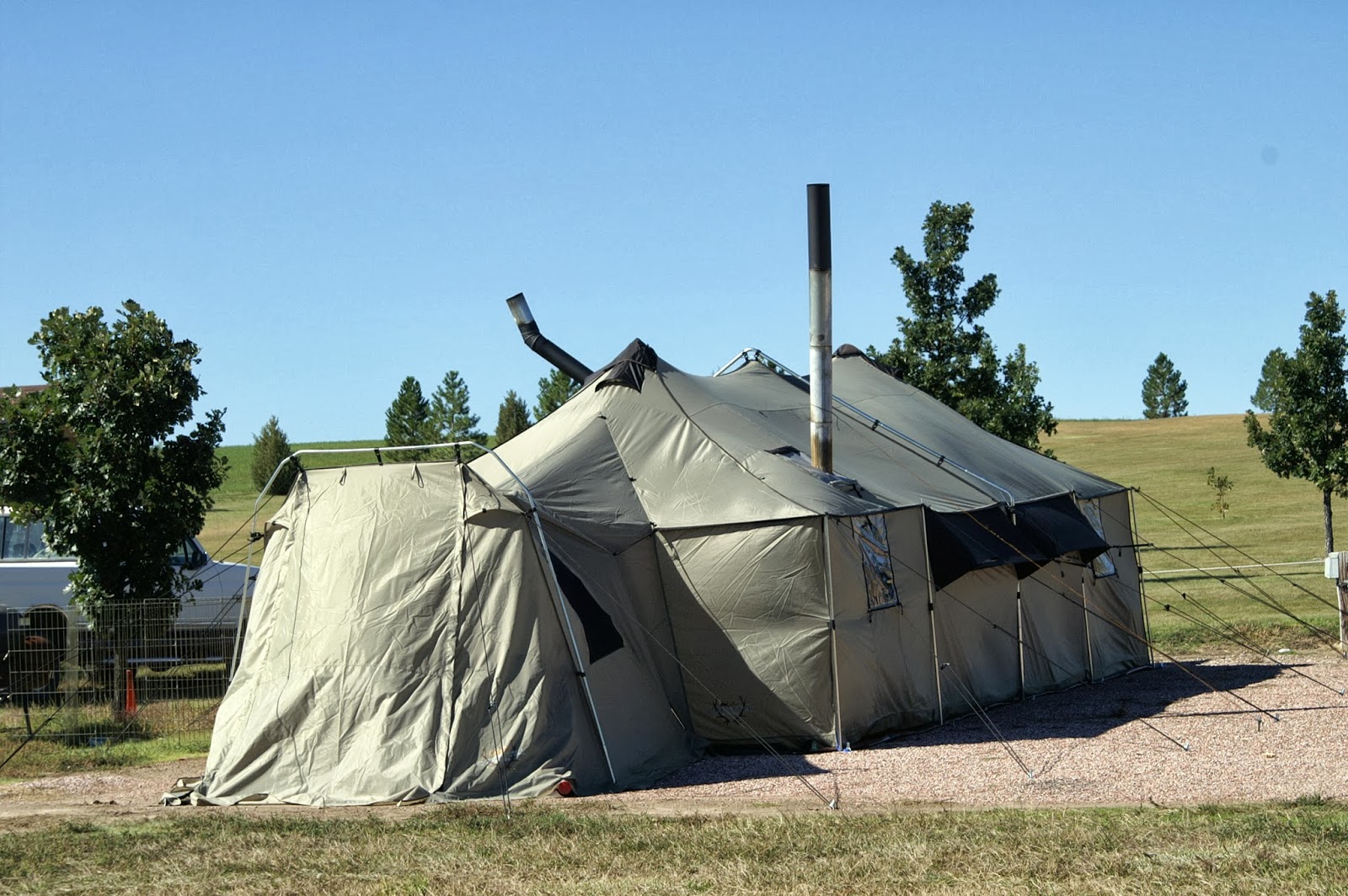
As we left the storm behind, we learned from the radio that Scottsbluff was hammered by a storm and snow, and we couldn't help wondering how our tenting neighbor we'd left behind there was faring.
We traveled almost 150 miles, stopping at Gothenburg, Nebraska, where the city has a nice campground on the shores of the (currently drained) Lake Helen. We extended our stay there to two nights, as there was a high wind advisory and the next day was forecast to be not quite so windy. I was checking the weather forecasts almost hourly on the Smartphone. It has become so indispensible.
Most of the attractions were closed for the season, but we were able to visit the Pony Express station in town, where it had been relocated to serve as a museum, with a nice little gift shop where I spent a few minutes pondering my Christmas list.
The Pony Express story is such a part of our national lore; it is hard to realize that it lasted only two years! We learned that most riders were under 18, with the youngest being 11, although the oldest was 42. The main reason for this is that the company was looking for small, lightweight riders.
Sunday, October 6, 2013
A Night at Wind Cave National Park
It was still the last days of September, before the National Parks shutdown, when we left Rapid City and made our way to Wind Cave National Park near Hot Springs, SD. As we entered the park, we were surprised there were no checkpoints, and, indeed, there don't seem to be any entry points. We saw trucks using the roads to travel through the park area. I read on another blog that one can still drive through, that the government hasn't gone out of its way to barricade the entrance, as they have some other NPS sites. Perhaps it's because of the traffic that uses the park to get from point A to B.
We made our way to the campground, where we found a spot for the night. We enjoyed a nice fire while we listened to the elk bugling just over the ridge, so near we thought we could see them if only it weren't dark. It sure is starting to get dark early, and we are conscious of the need to get further south before we find ourselves caught in the approaching winter weather.
The next morning, Jan and Damien went on one of the cave tours. There was a fee for that; Jan was half-price with his Senior pass, and Damien was charged the reduced youth fee. I stayed with the dogs and readied the trailer to go, perfectly happy to do so. My going would have doubled the fees, and I don't need to go to every cave.
The caves are remarkable for their size and also for their multiple levels. Several tours through the extensive system are offered, but at this time of year, only one tour was available. Above ground, there are thriving bison and prairie dog communities.
Some people just don't heed the wildlife warnings.
We made our way to the campground, where we found a spot for the night. We enjoyed a nice fire while we listened to the elk bugling just over the ridge, so near we thought we could see them if only it weren't dark. It sure is starting to get dark early, and we are conscious of the need to get further south before we find ourselves caught in the approaching winter weather.
The next morning, Jan and Damien went on one of the cave tours. There was a fee for that; Jan was half-price with his Senior pass, and Damien was charged the reduced youth fee. I stayed with the dogs and readied the trailer to go, perfectly happy to do so. My going would have doubled the fees, and I don't need to go to every cave.
The caves are remarkable for their size and also for their multiple levels. Several tours through the extensive system are offered, but at this time of year, only one tour was available. Above ground, there are thriving bison and prairie dog communities.
Some people just don't heed the wildlife warnings.
A Day in Rapid City: Chapel in the Hills
We finished up our day of being tourists in Rapid City with a visit to the Chapel in the Hills. This is an exact replica of a stave church built in Norway around 1150.
This project was conceived in the 1960s, and was related to the radio program Lutheran Vespers, which was broadcast from Rapid City at that time. The program moved to Minnesota in the 1970s, but the church has continued to host visitors, as well as weddings and other special ceremonies. It remains Lutheran, with pastors from local Lutheran churches presiding over services.
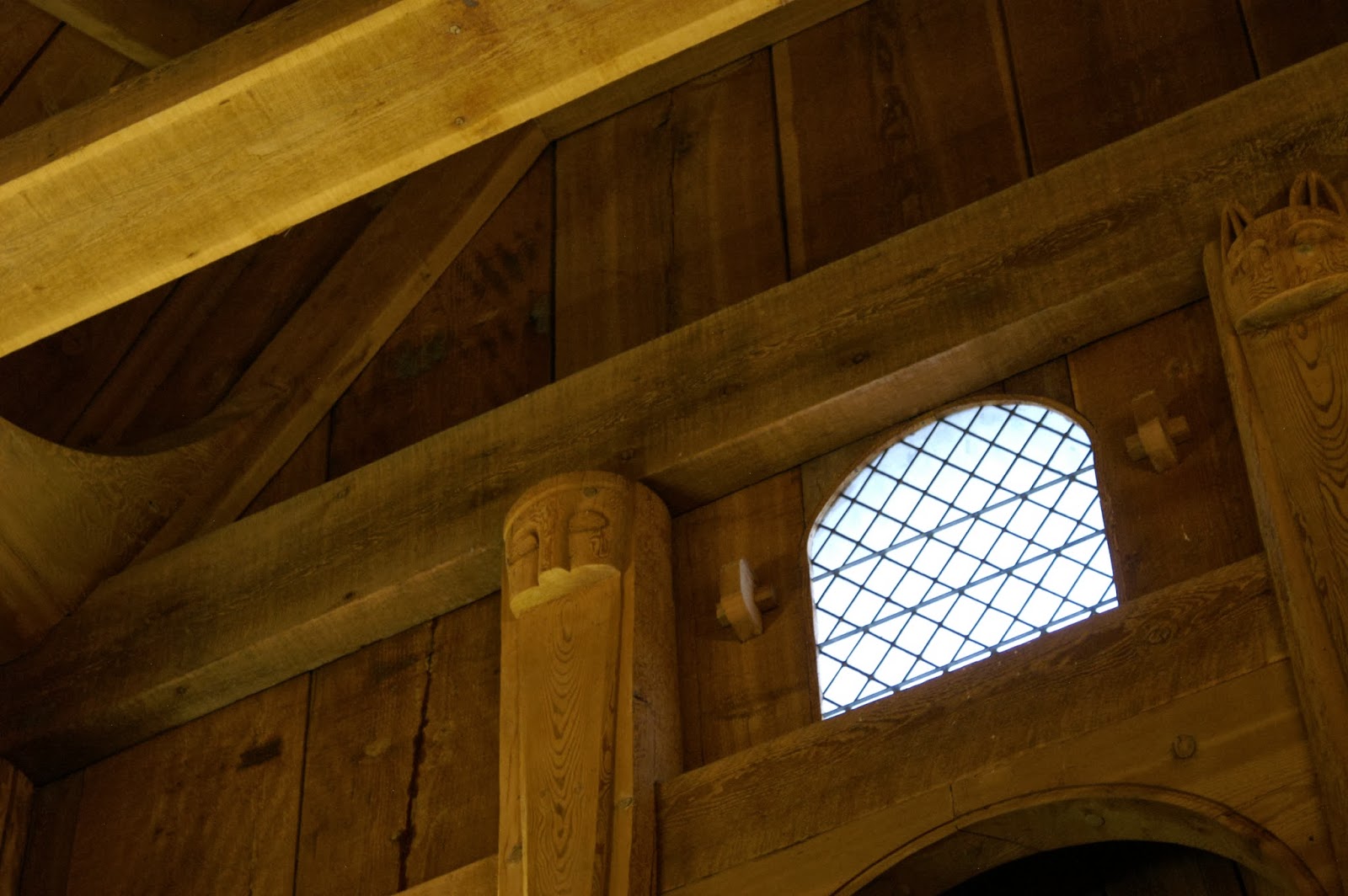
This is the leper's window, where the afflicted could also receive communion.
Adjacent to the chapel is what would have been the storehouse at the Norwegian original. It has a sod roof. Inside this structure is a gift shop with many Scandinavian gift items.
I've come to enjoy the little gift shops at the attractions we visit, because I hit upon the idea of filling my Christmas gift list with mementos of our travels. With a dozen grandchildren and a couple great grandchildren to shop for, perusing the shops' offerings is an enjoyable task. Before I thought of this, I walked past the gift shops because we live in an RV and where would I put things?
And next to the gift shop is a little museum. The items on display are a mixture of items from from all the Scandinavian countries.
On our way "home" (FamCamp at Ellsworth AFB), our shadow was long as I gazed at the passing South Dakota scenery.
This project was conceived in the 1960s, and was related to the radio program Lutheran Vespers, which was broadcast from Rapid City at that time. The program moved to Minnesota in the 1970s, but the church has continued to host visitors, as well as weddings and other special ceremonies. It remains Lutheran, with pastors from local Lutheran churches presiding over services.
This is the leper's window, where the afflicted could also receive communion.
Adjacent to the chapel is what would have been the storehouse at the Norwegian original. It has a sod roof. Inside this structure is a gift shop with many Scandinavian gift items.
I've come to enjoy the little gift shops at the attractions we visit, because I hit upon the idea of filling my Christmas gift list with mementos of our travels. With a dozen grandchildren and a couple great grandchildren to shop for, perusing the shops' offerings is an enjoyable task. Before I thought of this, I walked past the gift shops because we live in an RV and where would I put things?
And next to the gift shop is a little museum. The items on display are a mixture of items from from all the Scandinavian countries.
On our way "home" (FamCamp at Ellsworth AFB), our shadow was long as I gazed at the passing South Dakota scenery.
Thursday, October 3, 2013
A Day in Rapid City: The Presidential Walk
We headed to downtown Rapid City for Jan to visit the local Tinderbox, so he could get some more pipe tobacco. The downtown, especially on a beautiful late September afternoon, was inviting and vibrant.
These brothers came prepared!
There were even beautiful plantings of prairie grasses.
Downtown was definitely appealing!
I had noticed a couple presidential statues on street corners, and then I saw this sign.
Inside, we discovered that there are life-size presidential statues all over downtown! We bought a couple presidential sodas (do you prefer George Washington or Ronald Reagan root beer?), grabbed a guide booklet, and set out.
As I've said, Jan and/or Damien can never resist a little clowning around.
We spent a couple hours visiting all the statues and reading the interesting stories about each one of them. We weren't alone either; we encountered at least a couple dozen other visitors with open guidebook in hand. It was about as perfect an afternoon as I could have wished for!
Next: The Chapel in the Hills.
These brothers came prepared!
There were even beautiful plantings of prairie grasses.
Downtown was definitely appealing!
I had noticed a couple presidential statues on street corners, and then I saw this sign.
Inside, we discovered that there are life-size presidential statues all over downtown! We bought a couple presidential sodas (do you prefer George Washington or Ronald Reagan root beer?), grabbed a guide booklet, and set out.
As I've said, Jan and/or Damien can never resist a little clowning around.
We spent a couple hours visiting all the statues and reading the interesting stories about each one of them. We weren't alone either; we encountered at least a couple dozen other visitors with open guidebook in hand. It was about as perfect an afternoon as I could have wished for!
Next: The Chapel in the Hills.
A Day in Rapid City: Museum of Geology
We loved Rapid City, South Dakota. One day, we did some local sightseeing. There's a lot to see, but we kept it to one day, partly because we have to keep heading south, partly because we're on a tight budget so we are concentrating on low- or no-cost attractions.
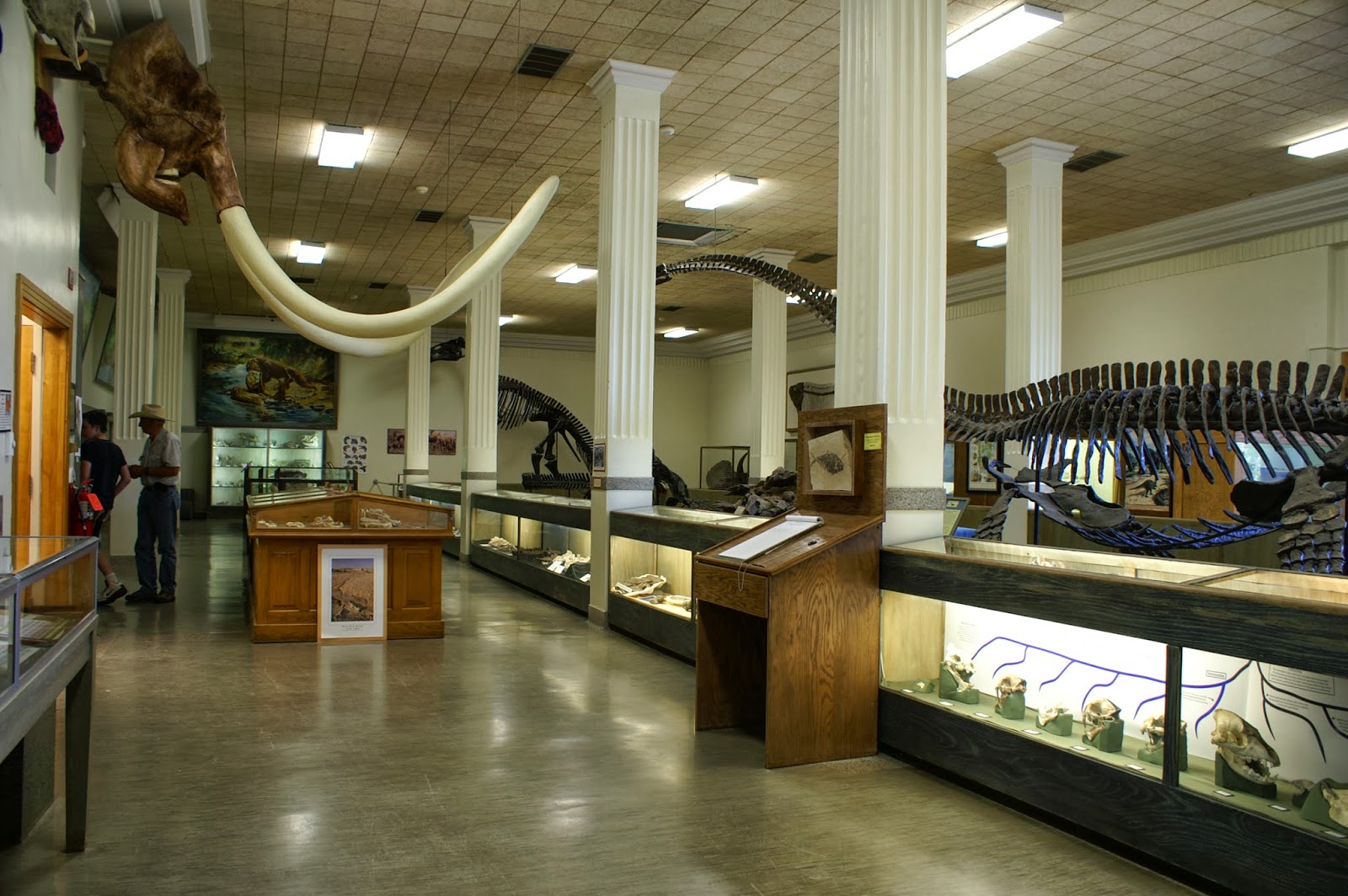
First, we went to the Geology Museum on the campus of South Dakota School of Mining and Technology. It's free, but donations accepted. I really enjoyed the museum; it's very well organized, with some really arresting exhibits. The guys really, really enjoyed it, so after I'd had my fill of rocks and fossils, I sat on a couch and read while they really got their fill. I'm more of an architecture/farms/villages/towns kind of tourist, myself.
Of course, what would an outed be without a little playing around?
First, we went to the Geology Museum on the campus of South Dakota School of Mining and Technology. It's free, but donations accepted. I really enjoyed the museum; it's very well organized, with some really arresting exhibits. The guys really, really enjoyed it, so after I'd had my fill of rocks and fossils, I sat on a couch and read while they really got their fill. I'm more of an architecture/farms/villages/towns kind of tourist, myself.
Of course, what would an outed be without a little playing around?
Saturday, September 28, 2013
Pilgrimage to Mount Rushmore
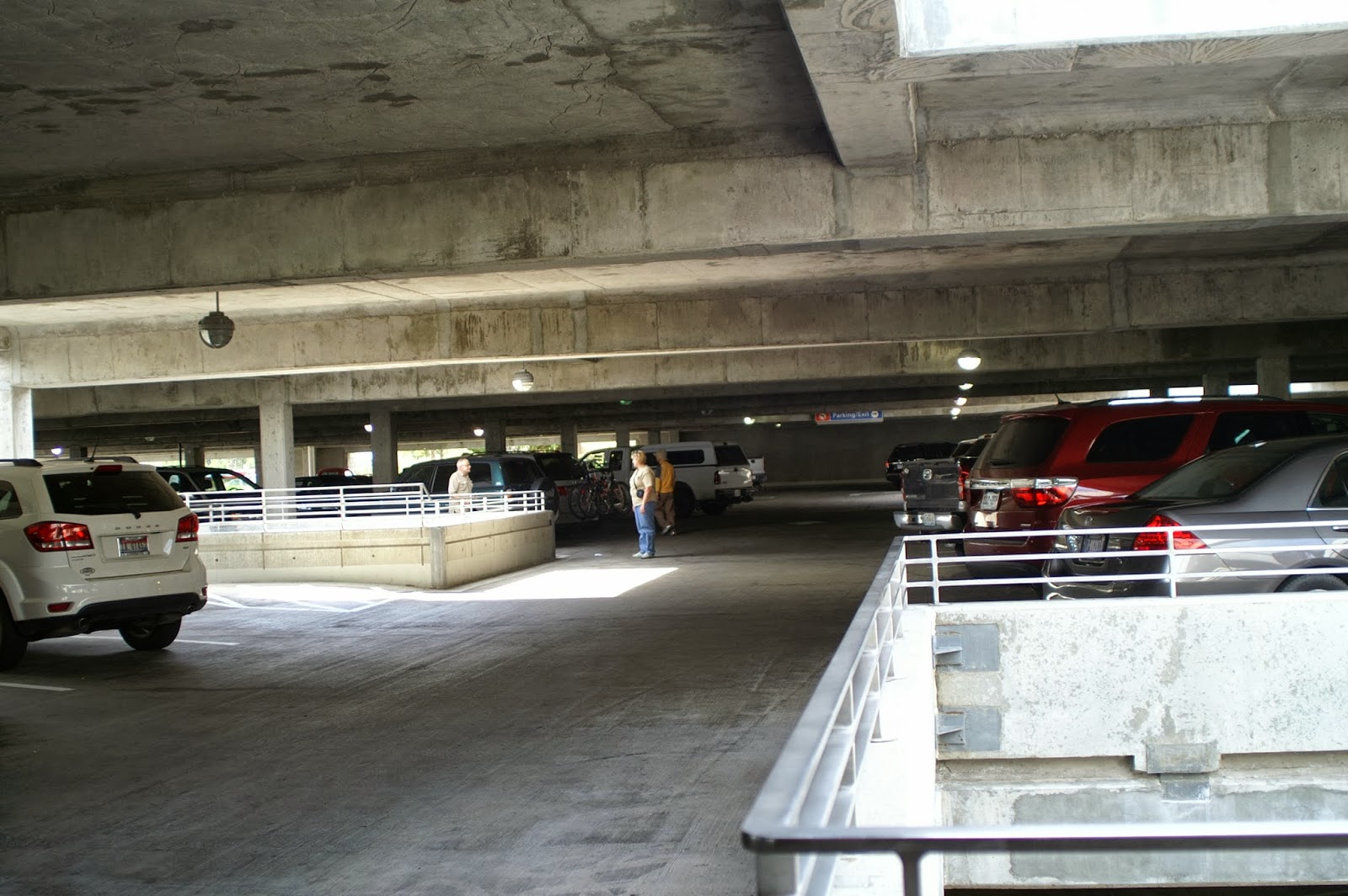
On Sunday afternoon, after church, we made the essential American pilgrimage to Mount Rushmore. As we had learned in advance, admission to the monument is free, BUT the parking is operated by a concession that charges a fee, in our case $11, which is not discounted for any Federal pass holders. The parking pass is good for the entire year, but I suspect few of Mount Rushmore's visitors are able to take advantage of that fact. We entered a multi-tiered parking garage and found a spot
before joining the many other visitors. Leaving the parking area, we approached the monument via a kind of concourse.
Despite the many pictures I've seen of Mount Rushmore, I never had any impression of the complex at the base of the monument, so it was somewhat of a surprise. Each of the pillars above bears state flags, with each state's year of statehood engraved on the pillar below its flag. The concourse ends in a platform overlooking an amphitheater, where evening visitors can watch light shows. At last, we were able to gaze at the giant sculptures that have come to symbolize America as much as the Statue of Liberty has.
The sheer size of the sculptures, and their looming height, is awe inspiring. We spent some time in the visitors' center, which is tucked under the viewing platform, where a movie and numerous exhibits reiterated just how amazing this achievement was.
It was constructed from 1927 to 1941 under the leadership of master sculptor Gutzon Borglum, who said it was "the formal rendering of the philosophy of our government into granite on a mountain peak." Begun during the swaggering 1920s, funding became a problem in the 1930s, and Borglum himself personally solicited funds so the project could continue.Borglum died in March 1941, but his son Lincoln oversaw the completion of the four heads. As the United States was entering World War II, the work stopped.
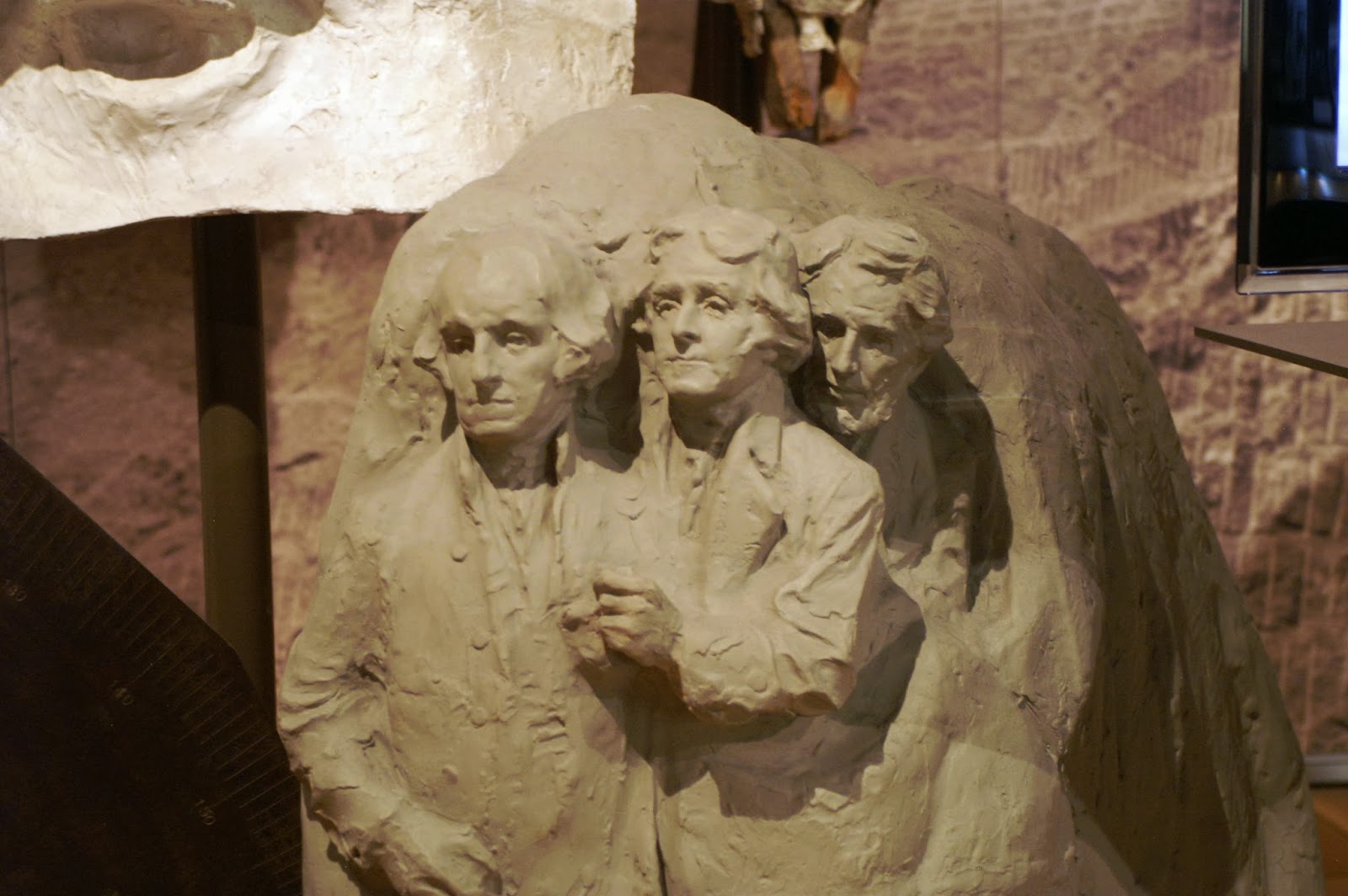
The process of carving the monument evolved as the work progressed. Apparently the initial concept was for three presidents.
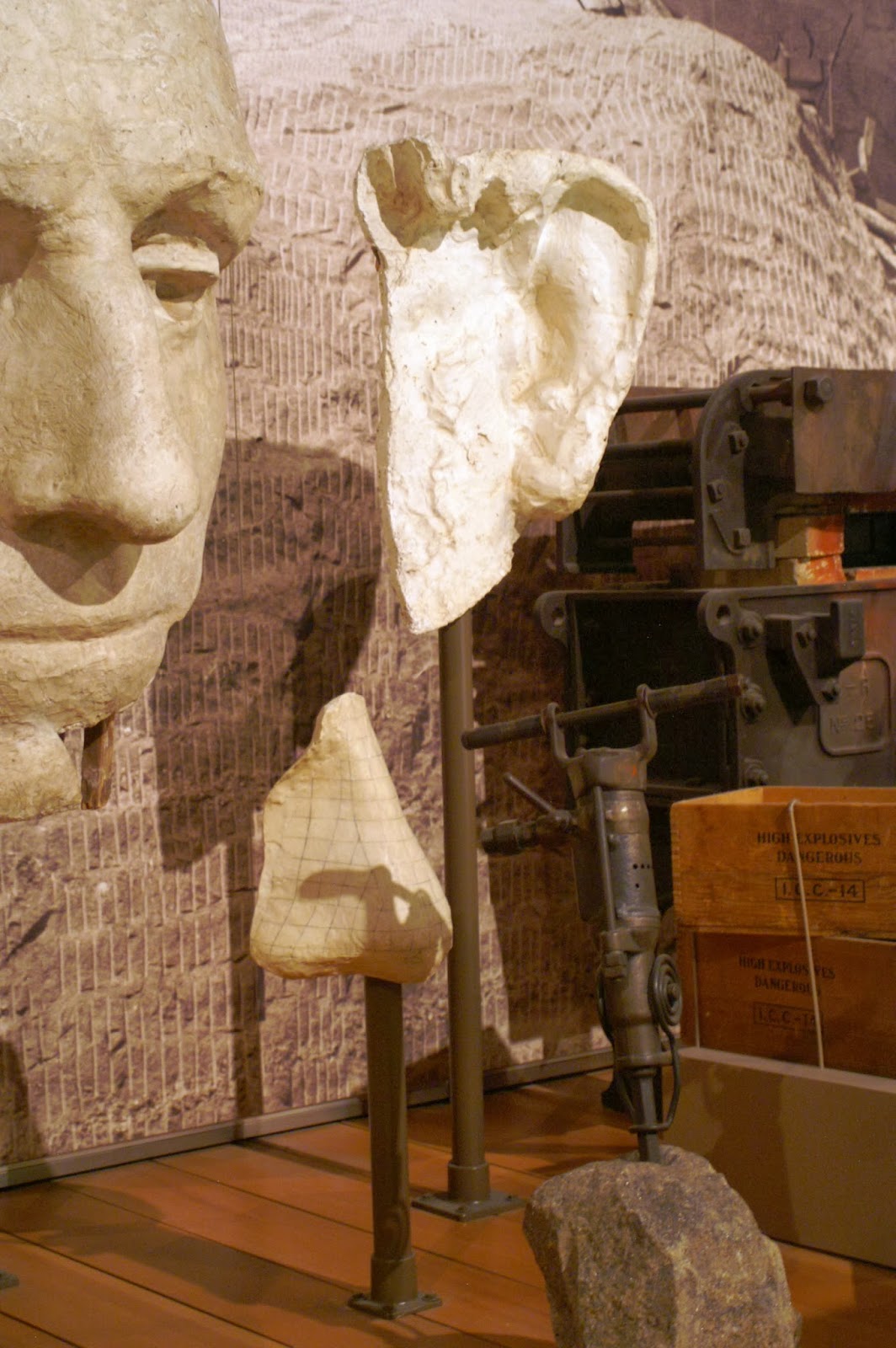
Even as work progressed, the realities of the stone called for adjustments in the sculpture, and the models evolved as the faces emerged from the mountain.
The brochure calls Mount Rushmore "A Shrine in the Black Hills." I think that is a good way to put it. It is like a shrine to American ideals, and visiting here is a kind of American pilgrimage. But, it is more than that; it is a pilgrimage that draws visitors from all over the world. We heard many tongues as we strolled among the other visitors.
Upon leaving, we somehow managed to turn the wrong way, but as often happens, it wasn't really wrong at all, since otherwise we wouldn't have seen this view of the George Washington head.
before joining the many other visitors. Leaving the parking area, we approached the monument via a kind of concourse.
Despite the many pictures I've seen of Mount Rushmore, I never had any impression of the complex at the base of the monument, so it was somewhat of a surprise. Each of the pillars above bears state flags, with each state's year of statehood engraved on the pillar below its flag. The concourse ends in a platform overlooking an amphitheater, where evening visitors can watch light shows. At last, we were able to gaze at the giant sculptures that have come to symbolize America as much as the Statue of Liberty has.
The sheer size of the sculptures, and their looming height, is awe inspiring. We spent some time in the visitors' center, which is tucked under the viewing platform, where a movie and numerous exhibits reiterated just how amazing this achievement was.
It was constructed from 1927 to 1941 under the leadership of master sculptor Gutzon Borglum, who said it was "the formal rendering of the philosophy of our government into granite on a mountain peak." Begun during the swaggering 1920s, funding became a problem in the 1930s, and Borglum himself personally solicited funds so the project could continue.Borglum died in March 1941, but his son Lincoln oversaw the completion of the four heads. As the United States was entering World War II, the work stopped.
The process of carving the monument evolved as the work progressed. Apparently the initial concept was for three presidents.
Even as work progressed, the realities of the stone called for adjustments in the sculpture, and the models evolved as the faces emerged from the mountain.
The brochure calls Mount Rushmore "A Shrine in the Black Hills." I think that is a good way to put it. It is like a shrine to American ideals, and visiting here is a kind of American pilgrimage. But, it is more than that; it is a pilgrimage that draws visitors from all over the world. We heard many tongues as we strolled among the other visitors.
Upon leaving, we somehow managed to turn the wrong way, but as often happens, it wasn't really wrong at all, since otherwise we wouldn't have seen this view of the George Washington head.
Subscribe to:
Posts (Atom)